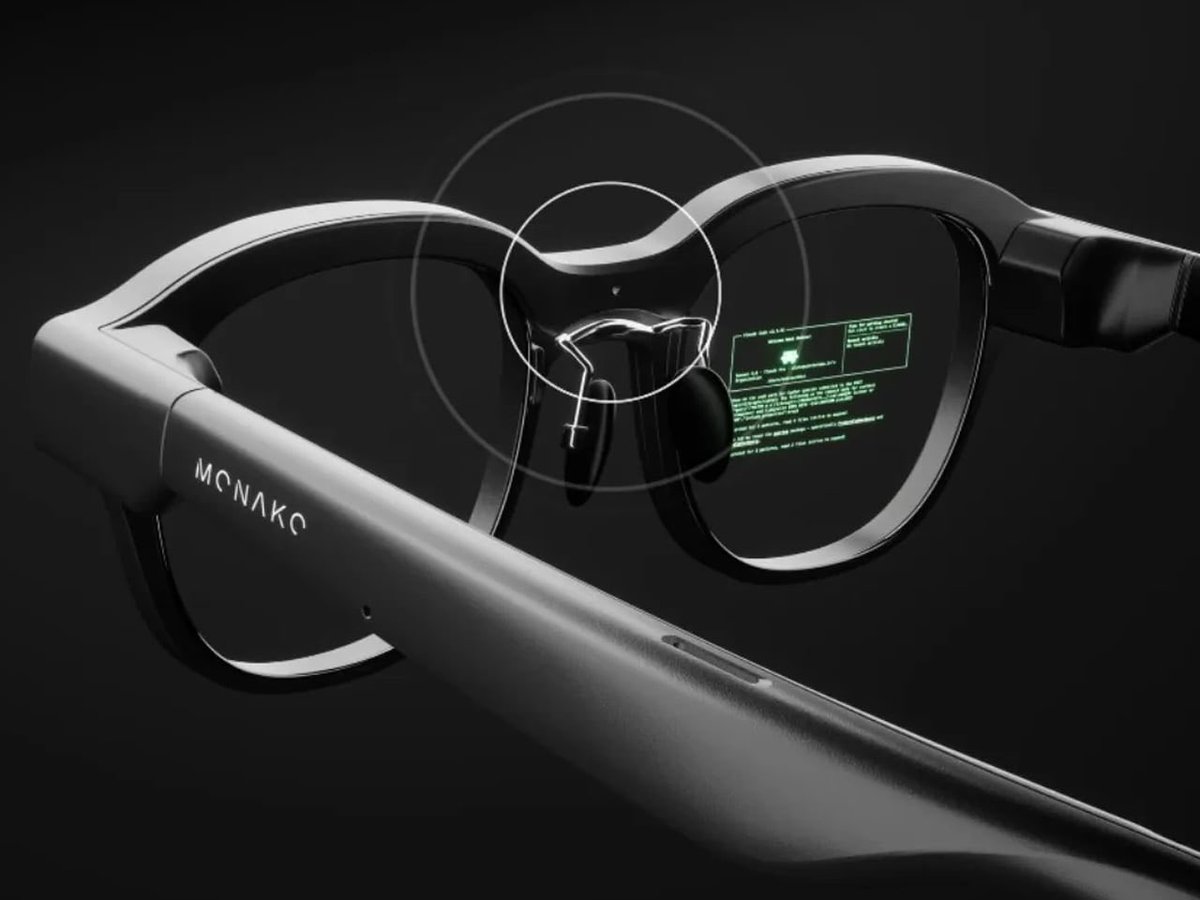
Monako, a startup focused on wearable developer tools, has unveiled smart glasses that can run coding agents anywhere. The device aims to let developers write, test, and deploy small code tasks hands-free while on the move.
The glasses combine a lightweight AR display, onboard AI acceleration, and a local runtime for coding agents. Monako says the hardware includes a custom neural processing unit (NPU) and 8 GB of RAM, enabling low-latency model execution without always needing cloud compute. Battery life is claimed at five to eight hours for mixed use. The glasses pair with phones and laptops and support Wi-Fi and 5G for optional cloud bursts.
Coding agents are small automated programs that can write code snippets, run unit tests, or debug workflows using voice and gaze commands. Monako demonstrated agents that scaffold app templates, fix simple bugs, and run CI checks, returning results on the AR display. The startup claims these agents reduce routine developer work by up to 30% in early internal tests.
Monako has launched a developer preview with 500 invited users and plans a broader beta later this year. Price for the initial developer edition is set at ₹75,000 (about $900), with enterprise bundles and cloud credits available separately. The company raised $15 million in seed funding to build hardware, developer tools, and an app marketplace for agents.
Industry experts say the product could help remote field engineers, product teams, and rapid prototyping workflows. Challenges include heat, privacy concerns from always-on cameras and mics, and competition from phone- and laptop-based AI tools. Monako says it uses on-device encryption and clear privacy controls, and allows users to run agents fully offline.
If adoption grows, these glasses could create a new niche where computing follows developers into real-world settings, blending AR and AI to speed everyday coding tasks.
FAQs [Frequently Asked Questions]
Q1: Can the glasses run agents offline?
Yes. Monako’s NPU and local runtime let many coding agents run offline; cloud is optional for heavy models or large-scale builds.
Q2: Who is the developer preview for?
The preview includes 500 invited developers—field engineers, mobile devs, and AI tool builders—before a wider beta later this year.
Q3: What are main privacy protections?
On-device encryption, user-controlled camera/mic toggles, and options to run agents offline reduce data sharing and protect user privacy.