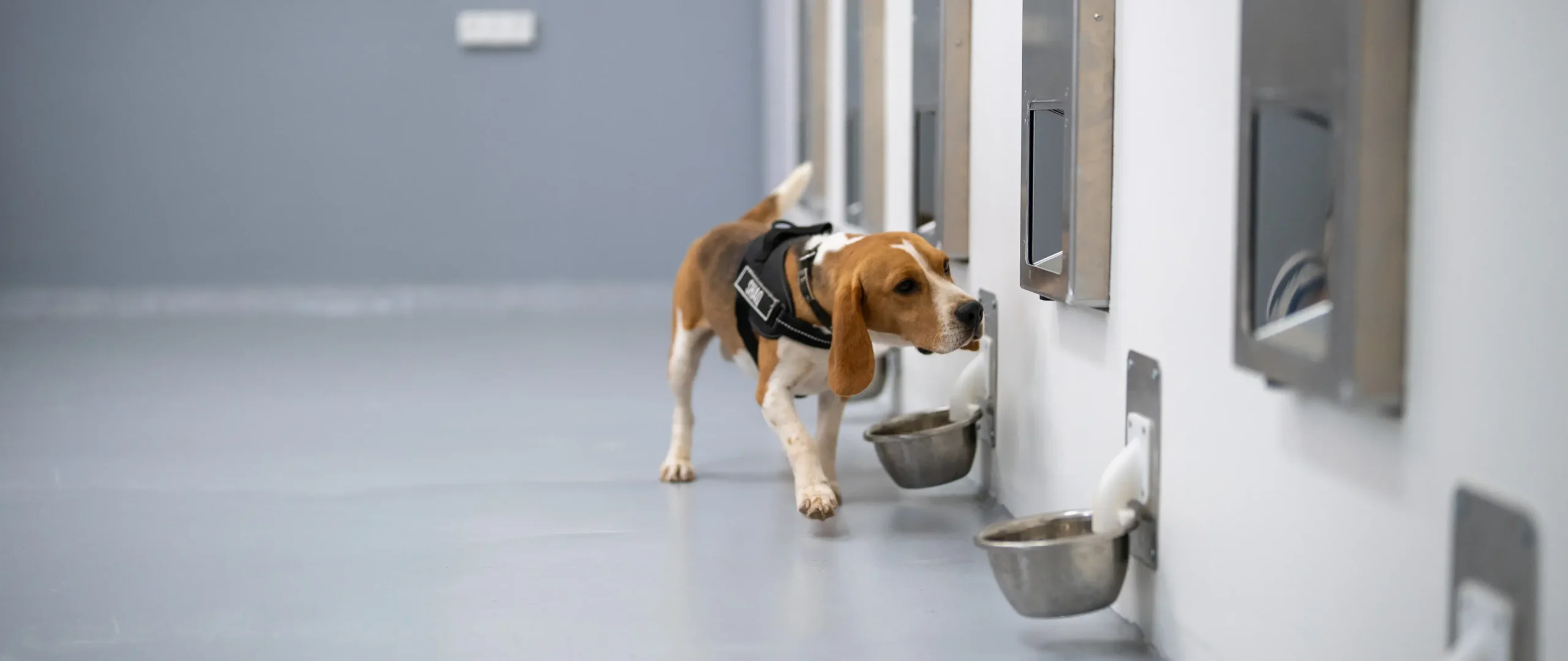
Bengaluru deeptech startup Dognosis is launching a novel cancer-detection approach that mixes trained dogs’ extraordinary sense of smell with artificial intelligence. The system reads signals from human breath to spot cancer-related compounds early, aiming for faster, cheaper, and more accessible screening.
Users breathe into a specially designed face mask for about 10 minutes. The mask captures volatile organic compounds (VOCs)—chemical signals that change when diseases like cancer develop. These samples are brought to Dognosis’s lab, where trained dogs evaluate them in a controlled setup equipped with sensors and monitoring systems. The dogs sniff for disease-related VOC patterns using their powerful olfactory ability.
While dogs perform the initial detection, AI transforms their reactions into objective data. Sensors record each dog’s response, and AI algorithms analyze these signals to reduce subjectivity and create a standardized detection process. CEO Akash Kulgod says the masks carry VOC signals that indicate disease presence, and the dog team identifies these compounds with high accuracy.
Dr Swaratika Majumdar, an oncologist on the project, says the concept offers an early, easy, and inexpensive way to detect cancers. She reports 90% sensitivity and specificity—meaning dogs identify cancer about 90% of the time when it’s present.
Dognosis’s Phase-2 trials, conducted over two years on nearly 1,500 participants, showed around 90% accuracy in detecting cancer from breath samples. The company says this proves early detection via breath is possible and that India-developed technology can contribute globally.
Cost per test could be very low—reportedly a few hundred rupees—making it suitable for mass screening. Still, larger validation studies are needed before widespread adoption. If approved, the system could help reach underserved populations and improve early diagnosis rates, where 80% of cases are currently missed until later stages.
FAQs [Frequently Asked Questions]
Q1: How does the test work?
Users breathe into a mask for ~10 minutes to capture VOCs. Trained dogs sniff samples; sensors record reactions, and AI analyzes them for cancer signals.
Q2: What accuracy has Dognosis reported?
Phase-2 trials on ~1,500 participants showed ~90% accuracy. The company reports 90% sensitivity and specificity in detecting cancer from breath samples.
Q3: Is this available for general use?
Not yet. Larger validation studies are needed. Early results are promising, but mass adoption depends on regulatory approval and clinical trials.