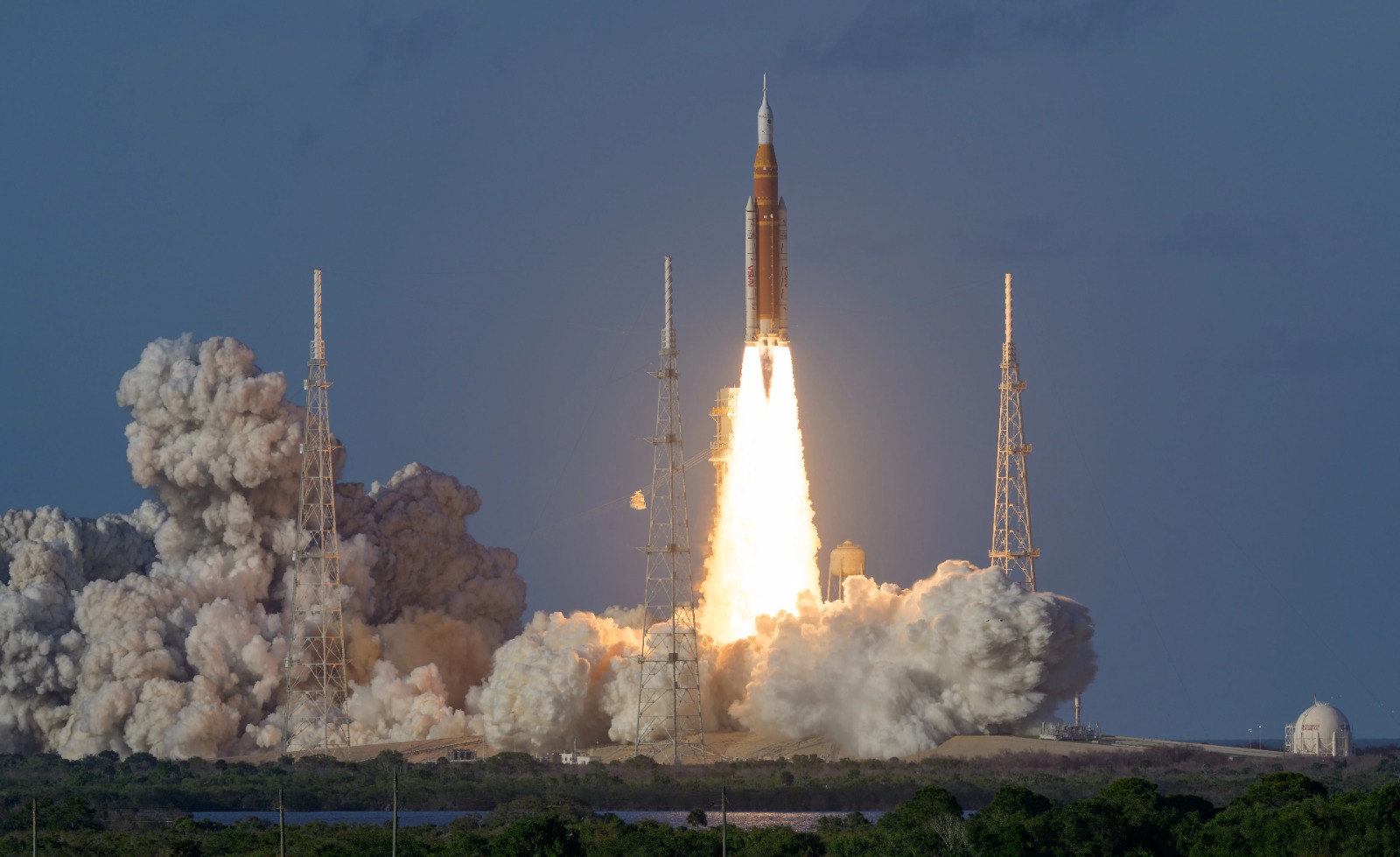
The Orion capsule, which carried four astronauts on a historic mission around the moon, has officially returned to NASA’s Kennedy Space Center in Florida. This journey marked the first crewed lunar mission in over 50 years, successfully traveling further from Earth than any previous human expedition.
Launched on April 1, 2026, the Artemis II mission saw commander Reid Wiseman, pilot Victor Glover, mission specialist Christina Koch, and Canadian astronaut Jeremy Hansen complete a 10-day trip around the lunar far side. The mission served as a vital test for deep-space systems, proving that the Orion spacecraft can safely transport and sustain human crews in extreme environments. After splashing down in the Pacific Ocean on April 10, the capsule was transported by truck from San Diego back to its original launch site.
Now that the “Integrity” capsule is back home, NASA engineers are initiating a thorough post-flight evaluation. This analysis is critical, with experts focusing heavily on the performance of the spacecraft’s heat shield and other essential hardware. These findings will be instrumental in finalizing preparations for the upcoming Artemis III mission, which aims to test advanced docking systems in orbit and pave the way for future human landings on the moon.
FAQs [Frequently Asked Questions]
1. What was the main purpose of the Artemis II mission?
The mission aimed to test deep-space systems and human safety protocols during a lunar flyby, acting as a crucial precursor to future moon landing missions under the Artemis program.
2. Who were the crew members of this historic flight?
The crew included commander Reid Wiseman, pilot Victor Glover, mission specialist Christina Koch, and Canadian astronaut Jeremy Hansen, representing a historic U.S.-Canadian collaboration in space exploration.
3. What happens to the capsule now that it has returned?
NASA engineers are performing detailed inspections of the capsule’s heat shield and electronic components to ensure data is collected for the development of future Artemis landing missions.