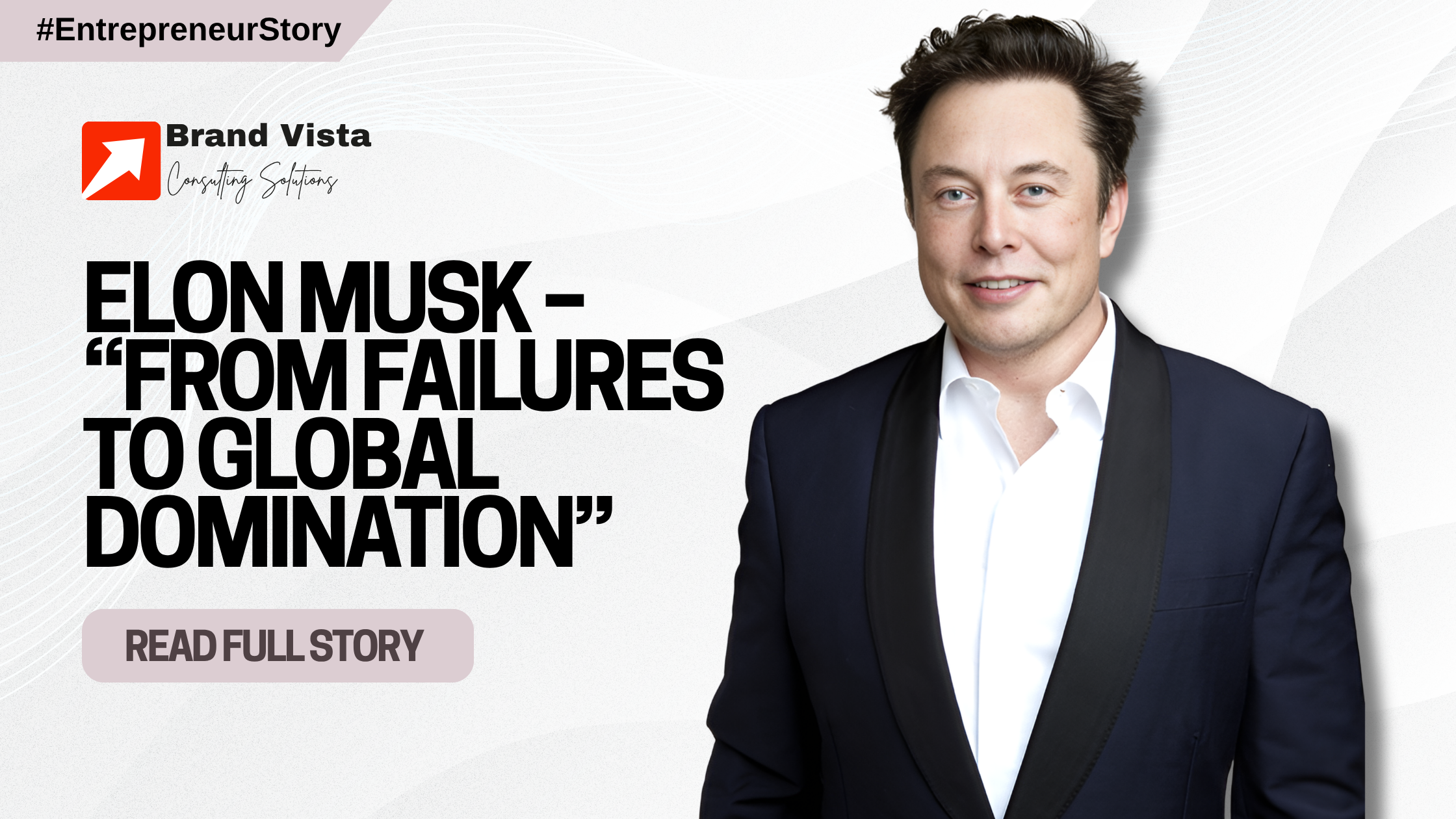
Elon Reeve Musk, a businessman and entrepreneur, is one of the most talked-about entrepreneurs of our time. His name appears in headlines about electric cars, rockets, artificial intelligence, and social media. But Musk’s path to success was not smooth. He faced big failures, personal setbacks, and strong criticism. Yet he kept pushing forward, learning from mistakes and aiming for bold goals. Let’s look at how failures shaped Musk’s journey and helped him build companies that now influence the world.
Early struggles and first ventures
Elon Musk grew up in South Africa and showed a strong interest in computers and technology from a young age. After moving to North America, he launched his first company, Zip2, a city guide software. Zip2 eventually sold, giving Musk his first real success. He then co-founded X.com, which later became PayPal. PayPal’s sale made Musk a multimillionaire, but the road included internal conflicts, leadership changes, and public criticism. These early ventures taught him tough lessons about management, teamwork, and the need to control product vision—lessons he would carry into later projects.
Rocket science and the price of failure
One of the most dramatic parts of Musk’s story is SpaceX. When he founded SpaceX in 2002, private rocket launches were rare and expensive. The first three Falcon 1 rockets failed, and the company nearly went bankrupt. People wrote Musk off as reckless. But instead of quitting, he redirected funds, pushed his engineers harder, and focused on redesigning the rockets. The fourth launch succeeded, and SpaceX began winning contracts and public attention. Today, SpaceX has changed the space industry with reusable rockets, regular crewed missions, and ambitions to reach Mars. The early failures taught Musk and his team- resilience, frugality, and the value of iterative engineering.
Tesla: electric dreams and near-collapse
Tesla is perhaps the company most associated with Musk in everyday life. When Musk joined Tesla Motors, electric cars were a niche idea and the company was young and cash-strapped. Tesla hit multiple roadblocks: production delays, quality problems, leadership fights, and harsh media scrutiny. In 2008, amid the global financial crisis, Tesla was near collapse. Musk invested his own money to keep the company alive. He pushed for a shift from niche roadsters to mass-market models like the Model S and later Model 3. Production stress followed, but Tesla’s focus on battery technology, software updates, and direct sales eventually paid off. The company helped make electric vehicles mainstream and encouraged legacy automakers to follow—showing how perseverance after failure can reshape entire industries.
Bold moves: acquisitions, controversies, and rapid scaling
Beyond SpaceX and Tesla, Musk has pursued many other bold projects: SolarCity (solar energy), Neuralink (brain-computer interfaces), The Boring Company (urban tunneling), and the 2022 acquisition of Twitter (now X). These moves often attracted controversy. Some ventures struggled to scale quickly or faced regulatory scrutiny. The Twitter acquisition, for example, brought intense public debate about content moderation, layoffs, and platform direction. Musk’s approach—acting fast, accepting risk, and making dramatic changes—has sometimes led to chaotic outcomes. Yet that same approach also enabled rapid innovation and rethinking of long-standing assumptions in energy, transport, and communications.
Lessons learned and leadership style
Looking at Musk’s journey from repeated failures to global impact reveals clear lessons:
- Embrace failure as data: Musk treats failures as experiments that reveal what needs fixing. This scientific mindset helped turn SpaceX and Tesla around.
- Focus on first principles: He often strips problems down to basic truths rather than following industry assumptions, enabling novel solutions like reusable rockets and integrated battery ecosystems.
- Prioritize mission-driven work: Musk frames his projects as solving existential or major human problems—sustainable energy, multiplanetary life—which attracts passionate teams and investors.
- Accept bold risk and personal sacrifice: Musk invested his own wealth at critical moments and tolerated high stress, which shows how personal risk can sometimes unlock bigger rewards.
- Leadership trade-offs: Musk’s demanding style can deliver breakthrough results but also causes burnout, staff turnover, and public controversy. That mix is part of why his companies succeed fast but often face internal struggles.
Global impact and future ambitions
Musk’s companies already shape global markets: Tesla drives EV adoption and battery innovation; SpaceX cuts satellite launch costs and expands internet access via Starlink; his AI and neurotech bets could change computing and medicine. Looking forward, Musk’s ambitions remain huge—colonizing Mars, creating mass autonomous transport, and advancing human-computer integration. Whether all these goals succeed is uncertain. But his track record shows one consistent pattern: ‘when others count him out after failure, he often returns with a redesigned plan that shifts expectations’.
Conclusion
Elon Musk’s rise from failures to global domination is not a simple success story. It is a mix of bold vision, repeated setbacks, hands-on leadership, and relentless iteration. His journey shows that failure does not end a dream; when handled as feedback, it can fuel reinvention. For entrepreneurs, founders, policymakers, and you, Musk’s story is a reminder: “large-scale change often follows a cycle of risk, failure, and adaptation”. The real question now is not whether Musk will try big things, but how society will shape, benefit from, and respond to the scale of those attempts.