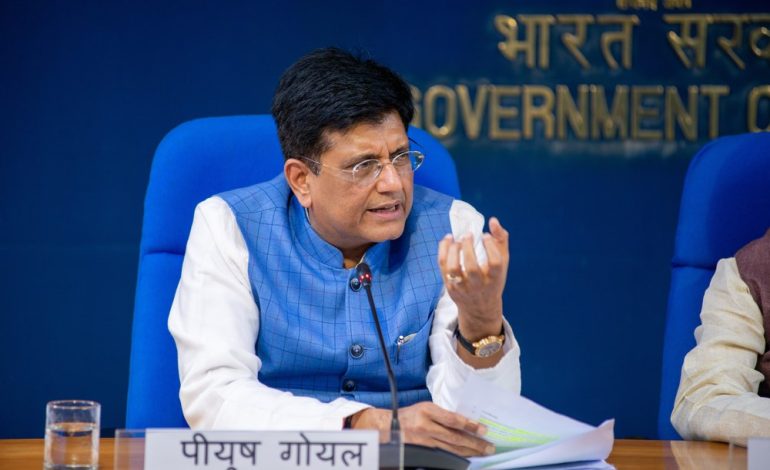
India is emerging as a climate and clean‑energy leader among G20 nations, Union Minister Piyush Goyal has said. Addressing a climate dialogue in New Delhi, Goyal stated that India ranks among the top 1–3 countries in the G‑20 for meeting its climate targets under the Paris Agreement, consistently outperforming many advanced economies.
Goyal highlighted that India has already reached about 260 gigawatts (GW) of renewable energy capacity, fulfilling its earlier renewable‑energy goals eight years ahead of schedule. The country’s initial 20 GW solar target was first raised to 100 GW and then met on time, showing strong policy execution and investment flows. India is now aiming for 500 GW of clean energy capacity by 2030, covering solar, wind, hydro and other non‑fossil sources.
The minister pointed to large‑scale solar and wind projects, green‑hydrogen missions, electric mobility, LED‑lighting drives and energy‑efficiency programmes as key drivers of India’s clean‑energy growth. He also recalled India’s leadership role at COP21 in Paris, where Prime Minister Narendra Modi helped bridge developed and developing nations and push for a flexible, consensus‑based climate deal. Goyal argued that India’s model proves that climate action and economic growth can go together, making it a template for other emerging economies.
FAQs [Frequently Asked Questions]
1. Why is India called a climate leader in the G20?
India meets its climate targets early, grows renewable energy fast, and balances emissions cuts with economic development, making it a model for other G20 and developing nations.
2. What is India’s clean‑energy target by 2030?
India aims to reach 500 gigawatts of non‑fossil‑fuel capacity by 2030, including solar, wind and hydro, to cut emissions and support green growth.
3. How does India’s climate path help other countries?
India shows that developing economies can grow fast while cutting emissions through renewables, energy efficiency and green‑hydrogen, giving a practical roadmap for similar nations.