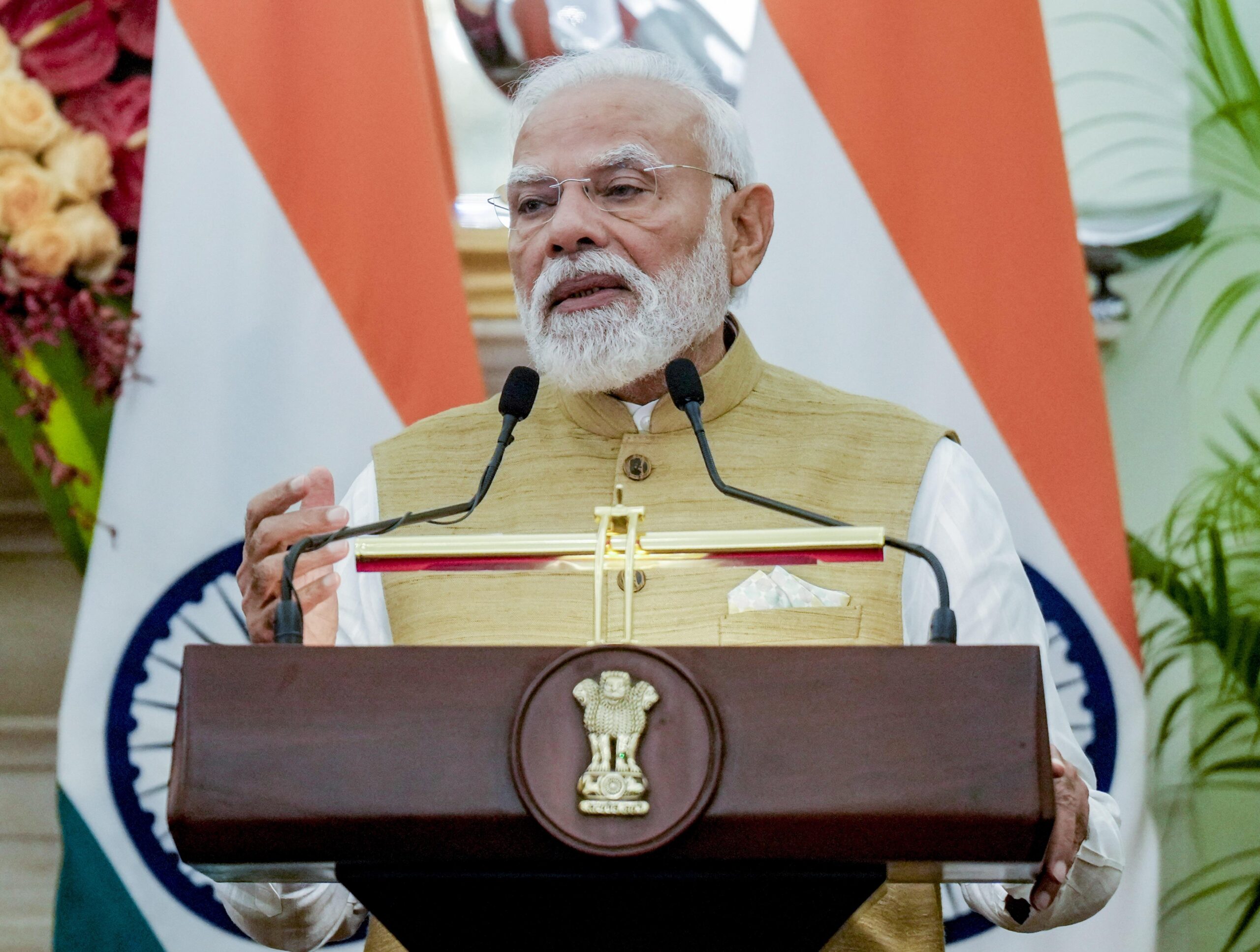
PM Modi welcomes Finnish President Alexander Stubb, stating his visit will elevate New Delhi-Helsinki ties to new heights. Finnish President Alexander Stubb arrived in New Delhi on March 4, 2026, for a four-day state visit until March 7. This marks his first trip to India as president, invited by PM Narendra Modi. He received a ceremonial welcome and Guard of Honour at the airport from Minister of State for External Affairs Kirti Vardhan Singh.
Stubb will hold bilateral talks with PM Modi on March 5 to boost cooperation in trade, investment, critical technology, and multilateral issues like West Asia tensions. PM Modi will host a lunch in his honour. Stubb is the Chief Guest and Keynote Speaker at the 11th Raisina Dialogue 2026. He will also meet President Droupadi Murmu, Vice President CP Radhakrishnan, and External Affairs Minister S Jaishankar. A high-level delegation of Finnish ministers, officials, and business leaders accompanies him.
India-Finland relations focus on innovation, green tech, and EU-Nordic partnerships. Bilateral trade reached €4.7 billion in 2024, with growth in clean energy and digital sectors. The visit aims to sign MoUs for deeper economic ties and people-to-people links. Stubb posted on X that it will strengthen trade, echoing Modi’s optimism for “new heights” in relations.
FAQs [Frequently Asked Questions]
1. When is President Stubb’s visit to India?
President Alexander Stubb’s state visit runs from March 4 to 7, 2026, in New Delhi. It includes high-level talks and the Raisina Dialogue.
2. What did PM Modi say about the visit?
PM Modi welcomed Stubb, saying it will take India-Finland relations to new heights. He looks forward to their meeting and Stubb’s keynote speech.
3. Who accompanies President Stubb?
A high-level delegation including ministers, senior officials, and business leaders accompanies him to discuss trade and cooperation.
4. What areas will the talks cover?
Talks focus on trade, investment, technology, green energy, and global issues like multilateral forums and regional stability.