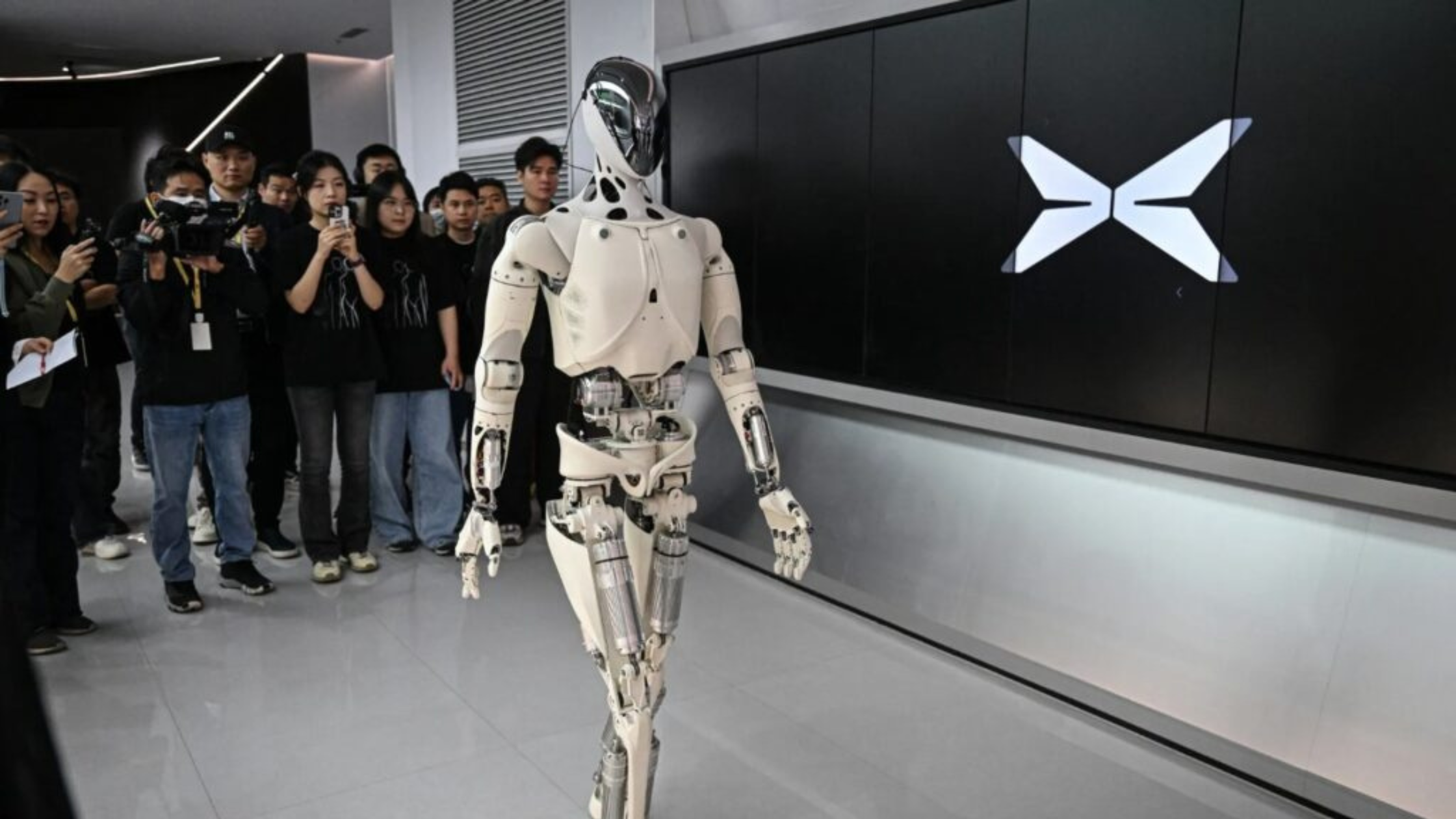
Chinese electric vehicle manufacturer XPENG has secured over $900 million for its robotics business at a post-money valuation of $6.3 billion to commercialize its IRON humanoid robot platform . The deal marks the largest single-round private fundraising in China’s physical AI sector to date by both capital raised and valuation .
The round was led by IDG Capital and Gaorong Ventures, with major strategic investments from technology giants Tencent and Alibaba . XPENG will retain controlling ownership of the robotics division, which remains fully consolidated within the group’s financial statements . Fresh capital is earmarked for full-stack physical AI R&D, physical world foundation models, training data generation, executive incentives, and building mass-production infrastructure, alongside global commercial expansion .
The IRON humanoid robot is engineered with a flexible lattice structure, offering 76 degrees of freedom across its body and 21 degrees of freedom in each hand for high dexterity . Powered by three in-house Turing AI chips delivering up to 2,250 TOPS of on-device computing power, IRON runs foundation models locally with low latency . Leveraging automotive-grade manufacturing standards from its EV lines, XPENG plans mass production of IRON by late 2026, starting in its own stores before delivering to external customers globally by 2027 .
[FAQs] Frequently Asked Questions
1.How much capital did XPENG’s robotics unit raise, and at what valuation?
XPENG’s physical AI unit raised over $900 million at a $6.3 billion valuation, marking China’s largest single-round private financing in the physical AI industry .
2.Who are the key investors backing XPENG’s humanoid robot division?
The financing round was led by IDG Capital and Gaorong Ventures, with strategic backing from Chinese tech giants Alibaba and Tencent .
3. What are the key technical specs and launch timeline for IRON?
IRON features 76 degrees of freedom, 2,250 TOPS compute via three Turing chips, and enters mass production in late 2026, with customer deliveries starting in 2027 .