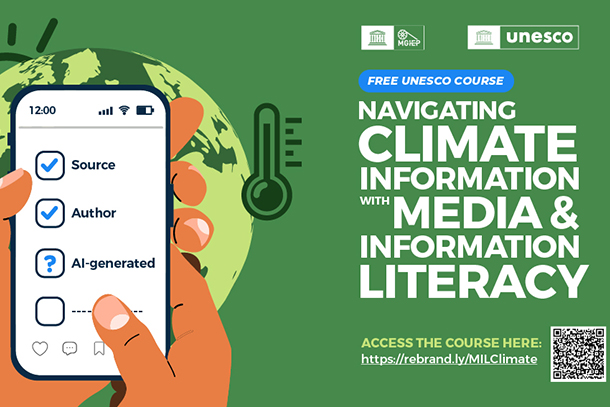
UNESCO has recently launched a free online course aimed at fighting climate disinformation by promoting Media and Information Literacy (MIL). This move comes as climate change discussions are increasingly being clouded by false or misleading information online. The course is designed to help people of all backgrounds—students, educators, policymakers, and the general public—develop the skills to spot fake news related to climate issues, understand the sources of information, and share only what is accurate and reliable.
The course, offered in collaboration with leading universities and global partners, is delivered through a self-paced online format. Learners can complete the course in about 10 hours, making it flexible for busy schedules. Upon completion, participants receive a certificate, which can be shared with employers or added to a learning record. The content is available to everyone for free, supporting UNESCO’s push for greater digital literacy worldwide.
Why Media and Information Literacy Matters for Climate
Climate disinformation has become a serious problem, influencing public opinion and even policy decisions. False information about climate change can spread rapidly online via social media platforms and unreliable websites. Such disinformation can slow down urgent climate action, confuse the public, or even deny the science behind climate change.
UNESCO’s new course addresses these challenges directly. It teaches learners to critically evaluate climate-related content, recognize signs of disinformation, and understand the importance of responsible online communication. The course uses practical examples, real-life case studies, and interactive lessons to help users recognize patterns of false climate information and counter them in their daily lives.
Who Can Join and How to Benefit
The free online course welcomes anyone interested in strengthening their media and information literacy, especially in the context of climate change. Policymakers, educators, journalists, students, and everyday internet users can all enroll. The course materials are designed to be understandable and practical, requiring no specialized background knowledge.
By finishing the course, participants gain key skills:
- Identifying and debunking climate misinformation
- Promoting accurate, science-based climate communication
- Supporting informed discussions and decisions in their communities