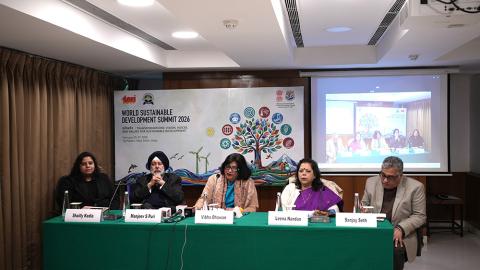
The World Sustainable Development Summit (WSDS) 2026, organized by The Energy and Resources Institute (TERI), marked its 25th edition as a landmark event for climate action. Held in New Delhi from February 24-26, it gathered global leaders, policymakers, and experts to address sustainability challenges amid rising climate risks. Over the years, WSDS has driven dialogues on renewable energy, green finance, and net-zero goals, influencing policies like India’s renewable energy targets. This year’s theme, “Leadership for Sustainable Futures,” featured sessions on climate finance, circular economy, and AI for sustainability. PM Narendra Modi inaugurated the summit, emphasizing India’s progress with 200 GW renewable capacity installed by 2025. Union Minister Bhupender Yadav highlighted Nationally Determined Contributions (NDCs), with India pledging 50% non-fossil energy by 2030. International speakers included UN envoys and CEOs from green tech firms.
India’s emissions grew 4.5% in 2025 but stayed below global averages, per TERI reports. The summit showcased $10 billion in green investments announced for solar and EV sectors. Past WSDS editions catalyzed initiatives like the International Solar Alliance, now with 120 members. Discussions focused on adapting to 1.5°C warming, with calls for $100 billion annual climate aid from developed nations.
The event ended with commitments for collaborative R&D in agritech and water security. TERI announced a $50 million fund for youth-led climate projects. As global temperatures hit record highs in 2025, WSDS 2026 reinforced urgent, collective action for a resilient planet.
FAQs [Frequently Asked Questions]
1. What is the theme of WSDS 2026?
“Leadership for Sustainable Futures,” focusing on climate finance, circular economy, AI, and net-zero strategies for global sustainability.
2. Who inaugurated the summit?
PM Narendra Modi inaugurated it on February 24, highlighting India’s 200 GW renewables and 50% non-fossil fuel target by 2030.
3. What key commitments emerged?
$10 billion green investments, $50 million youth fund, and enhanced NDCs for solar, EVs, agritech, amid 1.5°C adaptation goals.