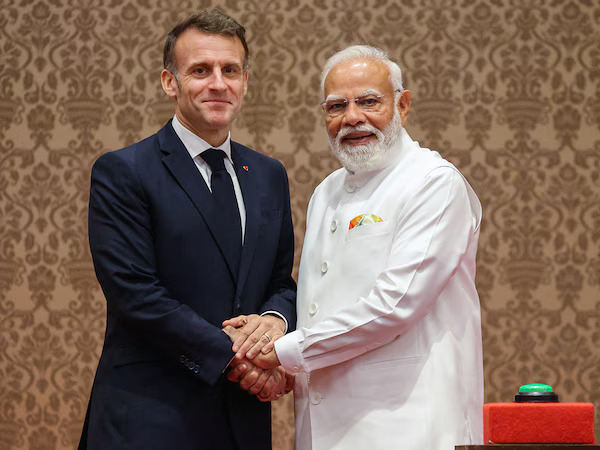
Prime Minister Narendra Modi has announced a major upgrade in India-France ties, elevating them to a “Special Global Strategic Partnership.” This step aims to boost cooperation in defense, innovation, trade, and technology amid global challenges. During a joint statement in Mumbai with French President Emmanuel Macron on February 17, 2026, PM Modi called the partnership a force for global stability and prosperity. It builds on France’s status as one of India’s oldest strategic partners, with no boundaries—from oceans to mountains. Key areas include defense (like HAMMER missile production with Bharat Electronics and Safran), clean energy, space, AI, critical minerals, biotechnology, and advanced materials.
The leaders launched the India-France Year of Innovation 2026 to connect startups, industries, students, and researchers. Agreements cover an Indo-French Centre for AI in Health, Digital Science Centre, and skilling in aeronautics. A double taxation avoidance pact and EU free trade momentum will spur trade, investment, and mobility, termed the “Roadmap of Shared Prosperity.” France aims to host 30,000 Indian students by 2030.
Twenty-one agreements were exchanged in defense, energy, and minerals. Macron highlighted trust-based ties in space, aeronautics, solar energy, and tech. PM Modi invited investors to India for inclusive progress, with Macron eyeing G7 collaboration in 2026. This partnership positions India and France as leaders in innovation and security.
FAQs [Frequently Asked Questions]
1. What is the Special Global Strategic Partnership?
It elevates India-France ties for global stability, covering defense, tech, trade, and innovation. Announced by PM Modi with President Macron in Mumbai on Feb 17, 2026.
2. What key initiatives were launched?
India-France Year of Innovation 2026, Innovation Forum, AI Health Centre, and Digital Science Centre to link startups, researchers, and industries.
3. Which sectors will see more cooperation?
Defense (missiles, joint R&D), space, clean energy, critical minerals, biotech, AI, and advanced materials for shared growth.
4. How will it benefit economy and people?
Double taxation pact boosts trade/investment; student mobility to 30,000 by 2030; people-to-people ties via innovation and skilling programs.