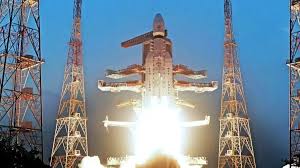
The Indian Space Research Organisation (ISRO) has announced an ambitious plan to conduct seven launches by March 2026, including one crucial uncrewed mission under India’s first human spaceflight program, Gaganyaan. The announcement highlights India’s growing space capabilities and its preparation for sending astronauts into orbit in the near future.
According to ISRO officials, the upcoming missions will include satellite launches for communication, earth observation, and navigation, along with experimental flights to test critical systems for future deep space missions. The uncrewed Gaganyaan mission, scheduled for mid-2026, will carry a humanoid robot named “Vyommitra” to simulate human presence and assess life support systems.
ISRO is also planning additional launches under its PSLV and GSLV mission series, enhancing India’s global role in low-cost and reliable satellite launches. The organization aims to strengthen collaboration with private space startups and boost industry participation through the Indian National Space Promotion and Authorization Centre (IN-SPACe).
The space agency’s recent successes, such as the Chandrayaan-3 moon mission and Aditya-L1 solar mission, have increased India’s reputation as a leading space power. Experts believe that completing multiple missions before March 2026 will prepare ISRO for the next phase — sending Indian astronauts into space by 2026–27.
With this roadmap, ISRO hopes to combine innovation, technology, and international cooperation to make India a key player in the global space economy.
FAQs [Frequently Asked Questions]
1. What is the Gaganyaan mission?
Gaganyaan is India’s first human spaceflight program, designed to send Indian astronauts into low Earth orbit. The upcoming uncrewed mission will test safety, environment control, and crew module performance before the manned flight.
2. How many missions will ISRO launch by March 2026?
ISRO plans seven launches, focusing on satellites for communication, navigation, and testing technologies for future space exploration, including the key uncrewed Gaganyaan flight.
3. What is the role of Vyommitra?
Vyommitra is a female humanoid robot that will travel aboard the uncrewed Gaganyaan mission to replicate human functions and monitor systems for astronaut safety and life support validation.
4. Why are these launches important for India?
These launches will boost India’s technological expertise, global partnerships, and readiness for crewed space missions, advancing national goals in research, defence, telecommunications, and international space cooperation.