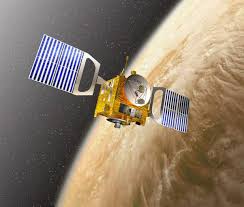
India’s space agency ISRO is preparing for its first interplanetary mission to Venus with the Venus Orbiter Mission (VOM), officially known as Shukrayaan-1. Scheduled to launch on March 29, 2028, aboard the powerful LVM-3 rocket, this groundbreaking mission will cost approximately ₹1,236 crore and marks India’s second interplanetary venture after the successful Mars Orbiter Mission. The spacecraft will embark on a 112-day journey to reach Venus by July 19, 2028, carrying 19 scientific payloads including 16 Indian instruments, two collaborative payloads, and one international payload. This mission represents a significant milestone in India’s space exploration capabilities, positioning the country among the elite nations exploring our solar system’s inner planets.
Revolutionary Scientific Exploration and Technology
Shukrayaan-1 will conduct comprehensive studies of Venus’s surface, atmosphere, and its interaction with solar radiation using advanced instruments. The mission will employ cutting-edge technology including synthetic aperture radar for detailed surface mapping, thermal cameras to monitor temperature variations, and atmospheric spectrometers to analyze the planet’s composition. For the first time, ISRO will use aero-braking technique, gradually lowering the spacecraft’s orbit from an initial elliptical path of 500 km x 60,000 km to a more suitable science orbit of 200 x 600 km over six to eight months. This innovative approach will help scientists study Venus’s geological features, volcanic activity, atmospheric dynamics, and the mysterious phosphine signatures that could indicate potential microbial life in the planet’s upper atmosphere.
Unlocking Earth’s Climate Secrets Through Venus
The mission holds profound significance for understanding Earth’s future climate evolution, as Venus represents what could happen under extreme greenhouse conditions. With surface temperatures exceeding 460°C and crushing atmospheric pressure 90 times greater than Earth’s, Venus offers critical insights into planetary atmospheric processes and climate change mechanisms. Scientists will investigate how Venus, once potentially habitable like Earth, transformed into the hellish world we see today with its thick carbon dioxide atmosphere and sulfuric acid clouds. The data collected will help researchers understand planetary evolution, atmospheric dynamics, and provide valuable lessons about climate processes that could apply to Earth’s long-term environmental changes, making this mission crucial for both space science and climate research.