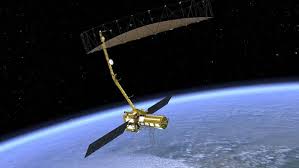
The NASA-ISRO Synthetic Aperture Radar (NISAR) satellite has successfully transmitted its first radar images of Earth’s surface, marking a historic milestone for this groundbreaking international collaboration. Launched on July 30, 2025, from India’s Satish Dhawan Space Centre, NISAR has now proven its advanced dual-frequency radar capabilities by capturing detailed images in August. The satellite features the largest radar antenna reflector ever deployed by NASA, spanning 39 feet (12 meters) in diameter, which successfully unfurled in orbit on August 15. This achievement represents a significant step forward as NISAR prepares to begin full science operations in November 2025.
Unprecedented Detail in Earth Observation
The first images showcase NISAR’s exceptional ability to distinguish between different types of land cover with remarkable precision. On August 21, the satellite’s L-band radar system captured Mount Desert Island along Maine’s coast, where dark areas represent water, green areas show forests, and magenta areas indicate built surfaces like roads and buildings. Two days later, NISAR imaged northeastern North Dakota, revealing agricultural patterns including circular center-pivot irrigation systems, fallow fields, and active crops like corn and soybeans. The L-band system can resolve objects as small as 15 feet (5 meters) and penetrate forest canopies to measure soil moisture and detect minute ground movements. This dual-band approach, combining NASA’s L-band with ISRO’s S-band radar, makes NISAR the first satellite to carry both systems on a single platform.
Transforming Global Earth Monitoring
NISAR’s capabilities extend far beyond traditional Earth observation, promising to revolutionize disaster response, climate monitoring, and agricultural management worldwide. The satellite orbits at 747 kilometers altitude and will scan nearly every part of Earth’s land and ice surfaces twice every 12 days, providing continuous global coverage. With its $1.5 billion investment shared between NASA and ISRO, NISAR will deliver invaluable data for tracking deforestation, monitoring glacier movements, detecting earthquakes and landslides, and supporting food security through precision agriculture. NASA Acting Administrator Sean Duffy praised the mission as “a testament to what can be achieved when we unite around a shared vision of innovation and discovery,” highlighting how this partnership strengthens both nations’ positions in global Earth observation.