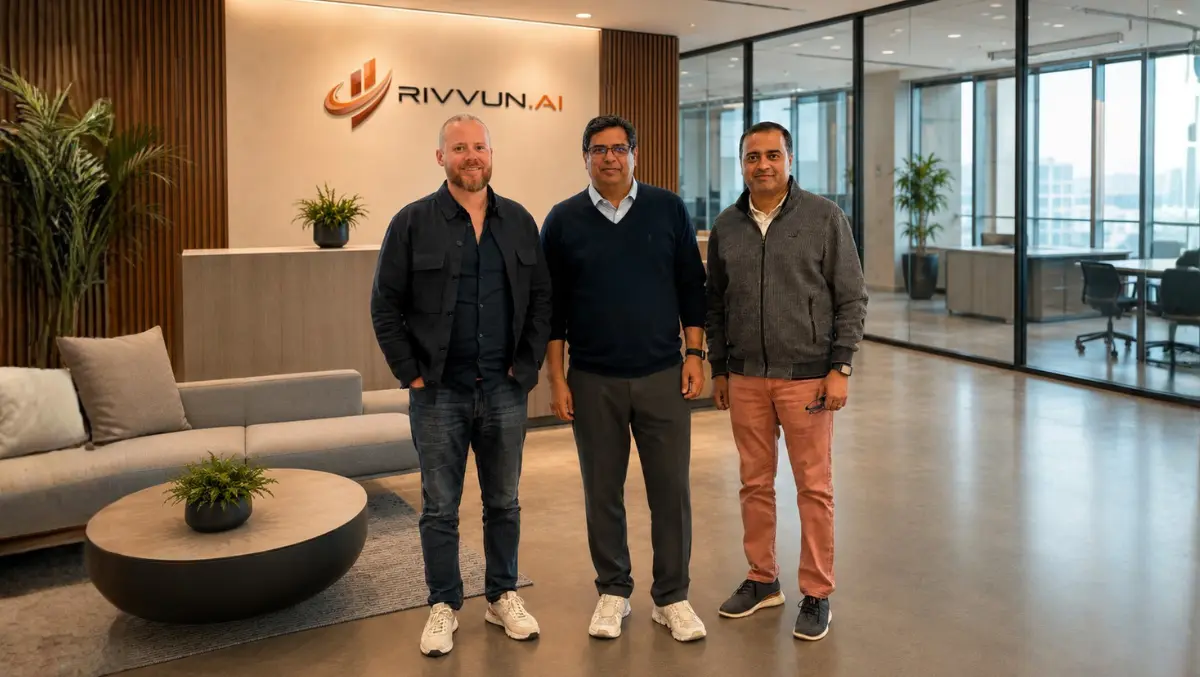
Former Icertis executives Anand Veerkar (CEO) and Niranjan Umarane (Chief Product Officer) have successfully raised $7.55 million (approximately ₹59 crore) in an oversubscribed seed funding round for their enterprise AI startup Rivvun AI. The round was co-led by Sitara Capital and 3one4 Capital.
Rivvun AI, founded in 2026 and based in Seattle and Pune, builds an autonomous AI execution layer that helps enterprises recover lost revenue and spending leakages. The platform identifies financial discrepancies between what corporations contractually negotiate and what actually hits their books—a costly problem the founders call the “execution gap”.
The company plans to use the fresh capital to scale its AI-powered platform, expand engineering teams, strengthen customer pilots, and deepen presence across key industries including pharmaceuticals and banking. Rivvun AI is targeting what the founders describe as a multi-trillion-dollar corporate headache, with projections suggesting enterprises could lose up to $2 trillion annually due to contract leakage.
Serial entrepreneur Patrick Linton also co-founded the startup alongside Veerkar and Umarane. The oversubscribed nature of the round indicates strong investor confidence in the enterprise AI space and Rivvun’s unique approach to revenue recovery.
FAQs [Frequently Asked Questions]
1. Who are the founders of Rivvun AI?
Rivvun AI was founded by former Icertis executives Anand Veerkar (CEO) and Niranjan Umarane (Chief Product Officer), along with serial entrepreneur Patrick Linton, in 2026.
2. How much funding did Rivvun AI raise and who invested?
Rivvun AI raised $7.55 million (₹59 crore) in seed funding, co-led by Sitara Capital and 3one4 Capital in an oversubscribed round.
3. What problem does Rivvun AI solve for enterprises?
Rivvun AI’s autonomous AI platform identifies and recovers revenue and spending leakages between contract obligations and financial settlements, targeting a $2 trillion annual problem.