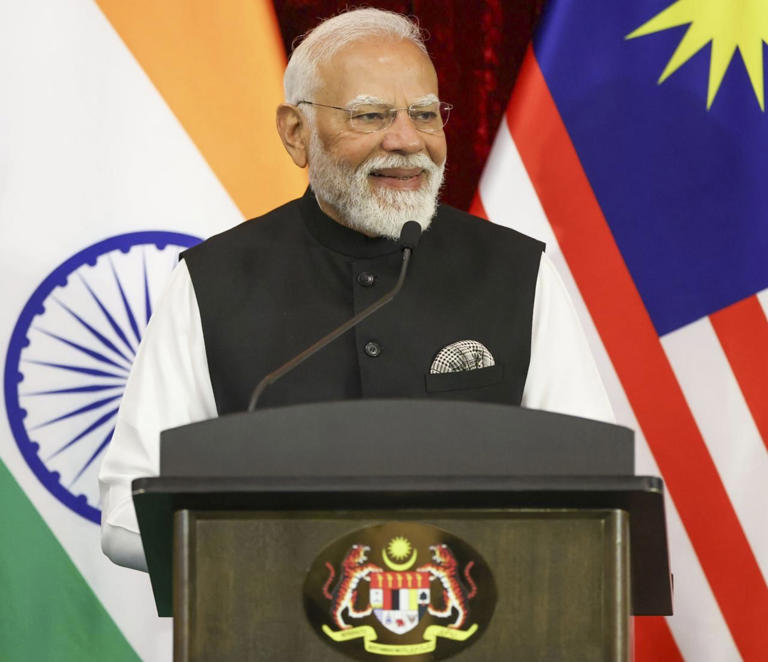
Prime Minister Narendra Modi recently met Malaysian Prime Minister Anwar Ibrahim in Kuala Lumpur to boost bilateral relations. On February 8, 2026, they pledged deeper ties in key areas like trade, defense, energy, and semiconductors. India and Malaysia aim to expand cooperation in high-priority sectors. Modi highlighted commitments to Indo-Pacific peace and stability. Both leaders agreed to grow trade and investment, with focus on advanced manufacturing and AI technologies. They also plan to strengthen defense ties, including counter-terrorism, intelligence sharing, and maritime security.
Modi firmly stated India’s stance: “Our message on terrorism is clear—no double standards, no compromise.” The joint statement condemned all forms of terrorism, including cross-border attacks, and called for zero tolerance. They vowed to fight terror financing, radicalization, and misuse of emerging tech, while boosting efforts via UN and FATF.
Malaysia supported India’s bid for permanent UN Security Council membership. Modi announced a new Indian Consulate General in Malaysia. A CEO Forum opened doors for business opportunities in health and food security. Modi called their friendship vital amid global instability, aiming for a prosperous Malaysia and developed India.
FAQs [Frequently Asked Questions]
1. What did Modi say about terrorism?
Modi declared no double standards or compromise on terrorism. Both leaders condemned it fully and pledged zero tolerance, plus action against financing and radicalization.
2. Which sectors will India-Malaysia boost?
Key areas include trade, defense, energy, semiconductors, AI, health, and food security. They aim for advanced manufacturing and Indo-Pacific stability.
3. Did Malaysia support India’s UN bid?
Yes, Malaysia backed India’s permanent membership in a reformed UN Security Council during the talks.
4. What new step did India announce?
India will open a Consulate General in Malaysia to strengthen people-to-people ties and diplomatic engagement.