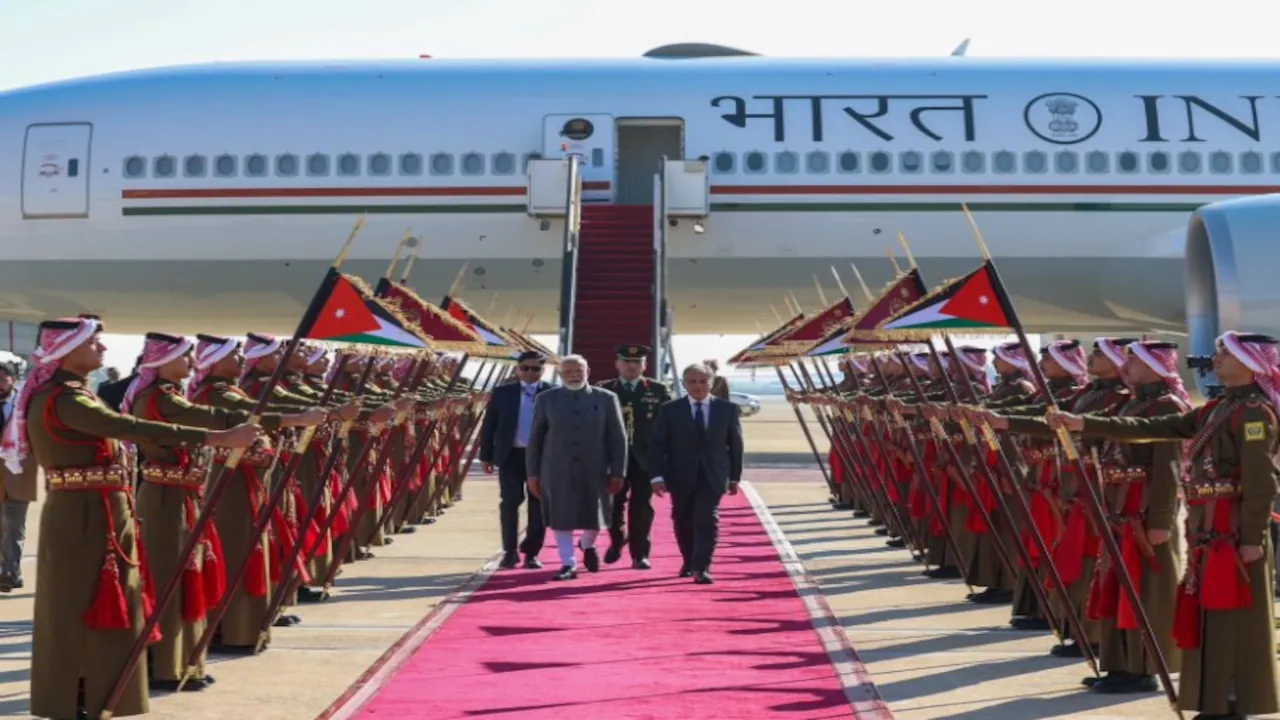
Prime Minister Narendra Modi’s ongoing visit to West Asia and Africa has drawn major attention to India’s growing ties with Jordan. The visit aims to strengthen political, economic, and cultural relations between the two nations, with a special focus on trade, defence, and technology cooperation.
During his stopover in Amman, PM Modi met King Abdullah II of Jordan. The two leaders discussed regional peace, counterterrorism efforts, and investment opportunities. They agreed to expand cooperation in areas such as pharmaceuticals, renewable energy, and agri-technology — sectors where India holds significant expertise.
India and Jordan share strong diplomatic relations that go back to 1950. In recent years, bilateral trade between the countries has crossed USD 1.5 billion, with key exports including fertilizers, pharmaceuticals, and machinery. India is also one of Jordan’s top trading partners in Asia.
PM Modi’s broader tour also covers the UAE, Egypt, Kenya, and Tanzania — regions seen as crucial for India’s global outreach strategy. By deepening partnerships in West Asia and Africa, India aims to diversify its energy sources and promote south-south cooperation in development and technology sharing.
The Jordan leg of the visit reflects India’s balanced foreign policy in the Middle East, focusing on regional stability and mutual growth. Experts say this engagement highlights New Delhi’s commitment to becoming a reliable partner in promoting peace and economic progress across the Arab world.
FAQs [Frequently Asked Questions]
1. Why is Jordan important for India?
Jordan serves as India’s gateway to West Asia, offering strong political ties, investment potential, and cooperation in fertilizers, technology, and defence. It also plays a stabilizing role in the Middle East region.
2. What sectors link India and Jordan?
The two nations collaborate mainly in fertilizers, phosphates, pharmaceuticals, IT, and renewable energy. Both countries are exploring new areas in education, agritech, and culture to enhance mutual growth.
3. How does this visit benefit both countries?
PM Modi’s visit aims to attract investments, expand trade, and boost energy and defence partnerships. It also reinforces India’s long-term diplomatic and strategic presence in West Asia and North Africa.