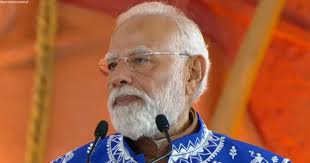
Prime Minister Narendra Modi took a major step for tribal communities in Gujarat on October 23, 2024, by inaugurating 42 Eklavya Model Residential Schools (EMRS), 228 community centres, and flagging off 250 buses for tribal districts. This initiative aims to improve education, healthcare, and connectivity in remote areas, benefiting over 1.5 lakh tribal students and families.
The EMRS schools, spread across 42 locations, will provide free boarding and quality education to tribal children from Class 6 to 12. Each school costs around Rs. 40 crore and follows the CBSE curriculum with a focus on local languages and culture. Built under the Ministry of Tribal Affairs, these institutions address the high dropout rates in tribal areas, where only 52% of children complete secondary education, according to government data. PM Modi emphasized that these schools will empower the next generation, creating skilled youth for India’s growth.
In addition, the 228 community centres, valued at Rs. 100 crore, will serve as hubs for health check-ups, skill training, and cultural events in villages. They target the 14% of Gujarat’s population that is tribal, helping reduce poverty from 45% in 2011 to under 30% today through better access to services.
The 250 eco-friendly buses, worth Rs. 150 crore, will connect 1,000+ remote hamlets, cutting travel time by 50% and improving school attendance. PM Modi flagged them off virtually from his birthplace, Vadnagar, highlighting Gujarat’s tribal heritage.
This Rs.1,200 crore project aligns with the PM’s vision of “Sabka Saath, Sabka Vikas.” It promises inclusive growth, with experts predicting a 20% rise in tribal employment by 2030.
FAQs [Frequently Asked Questions]
-
What are Eklavya Model Residential Schools (EMRS)?
EMRS are fully residential schools for tribal students aged 6-18, offering free education, boarding, and vocational training. They aim to bridge the urban-rural gap, benefiting 3,000 students per school annually. -
How will the new buses help tribal districts?
The 250 buses will provide safe, affordable transport to schools, hospitals, and markets in 50 tribal blocks. This reduces isolation, boosts attendance by 30%, and supports daily livelihoods for 5 lakh people. -
What is the total investment in this project?
The initiative costs ₹1,200 crore, funded by the central government. It includes schools (₹1,680 crore equivalent), centres (₹100 crore), and buses (₹150 crore), focusing on sustainable tribal upliftment.