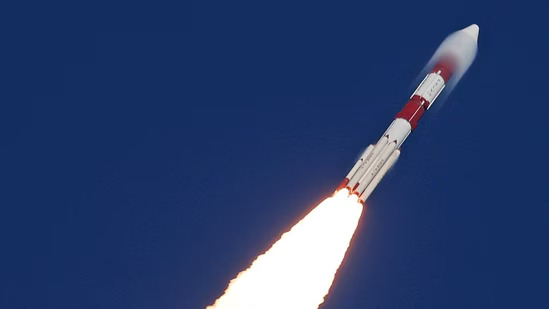
Union Minister of State for Science & Technology Jitendra Singh congratulated ISRO on the successful hot test of the CE20 cryogenic engine at 22-tonne thrust. Conducted on March 13, 2026, at Mahendragiri’s High Thrust Test Facility, this marks a key milestone for India’s heavy-lift rockets. The engine fired flawlessly for 60 seconds, hitting 22,000 kgf (kilogram-force) vacuum thrust—its full rated power.
The CE20, evolved from the CE-20 model, powers the LVM3 upper stage and will propel the Next Generation Launch Vehicle (NGLV). It uses liquid hydrogen and liquid oxygen, delivering high efficiency for geostationary satellite missions. Previous tests scaled up from 12-tonne (2024) to this 22-tonne level, boosting payload capacity to 8-10 tonnes to Geostationary Transfer Orbit (GTO).
ISRO Chairman V. Narayanan praised the team’s precision amid challenges like cryogenic fuel handling at -253°C. This test validates indigenous tech, reducing reliance on foreign engines. Jitendra Singh tweeted: “ISRO’s CE20 success strengthens India’s space prowess, eyeing crewed missions and lunar returns.”
India’s space program shines: LVM3 launched 25 missions since 2014, including Chandrayaan-3’s 2023 Moon south pole landing. NGLV, targeting 2030 debut, aims for 25-tonne GTO payloads, rivaling Europe’s Ariane 6. The CE20’s restartable design enables complex maneuvers.
This aligns with India’s 2047 space vision: Gaganyaan human flight by 2026, Bharatiya Antariksh Station by 2035. Cost-effective at Rs.1,000 crore development, it supports commercial launches via NewSpace India Ltd.
Experts predict faster NGLV qualification. “CE20 de-risks upper stage tech,” says ISRO’s propulsion director. With PSLV’s 60+ successes, ISRO eyes Mars Orbiter Mission-2. Proud moment for 1.4 billion Indians!
FAQs [Frequently Asked Questions]
1. What was achieved in the CE20 test?
ISRO tested the CE20 cryogenic engine at full 22-tonne vacuum thrust for 60 seconds on March 13, 2026, validating it for NGLV upper stage.
2. Why is the CE20 engine important?
It uses liquid hydrogen/oxygen for high efficiency, enabling 8-10 tonne GTO payloads and restart capability for advanced missions like Gaganyaan.
3. What’s next for ISRO after this test?
Full NGLV development accelerates toward 2030 debut, supporting crewed flights, space station, and heavier commercial satellite launches.
(*Image Source- Hindustan Times)