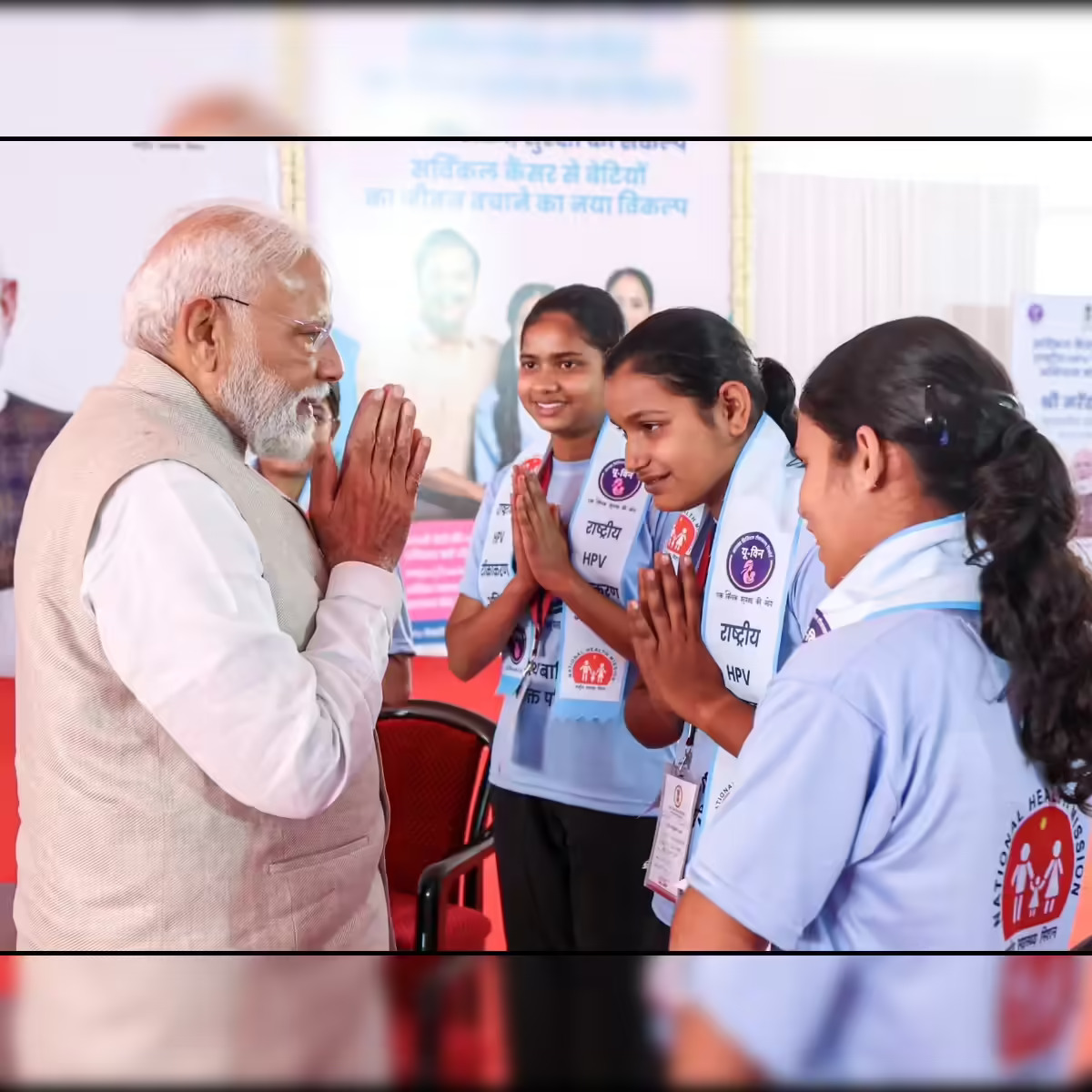
PM Narendra Modi recently launched a nationwide HPV Vaccination Programme targeting girls aged 14 years, a major step to combat cervical cancer in India. Prime Minister Narendra Modi flagged off the initiative from Ajmer, Rajasthan, on February 28, 2026. This free vaccination drive aims to protect adolescent girls from Human Papillomavirus (HPV), the primary cause of cervical cancer, which affects thousands of women annually in India. The single-dose Gardasil 4 vaccine guards against HPV types 16, 18 (linked to cervical cancer), and 6, 11 (causing genital warts).
The programme targets about 1.15 crore girls each year across all states and union territories. Vaccinations occur free at government facilities like Ayushman Arogya Mandirs, Community Health Centres, and district hospitals. It runs in mission mode for three months, with daily doses, then continues on routine immunization days. Parental consent is mandatory, and sessions are supervised by trained medical officers with cold chain support and AEFI management.
India joins over 160 countries with HPV programs, boosting women’s health and preventive care. PM Modi emphasized healthy daughters for strong families, aligning with broader healthcare goals. Early vaccination at age 14 ensures long-term protection before exposure risks rise.
FAQs [Frequently Asked Questions]
1. What is the HPV vaccine used?
Gardasil 4, a single-dose quadrivalent vaccine, protects against HPV types 16/18 (cervical cancer) and 6/11 (warts). It’s safe and effective for 14-year-old girls.
2. How many girls will benefit yearly?
About 1.15 crore girls aged 14 across India receive free doses annually at government health facilities.
3. Is vaccination compulsory?
No, it’s voluntary with parental/guardian consent. Sessions are supervised with safety measures for rare side effects.
4. Where can girls get vaccinated?
At Ayushman Arogya Mandirs, PHCs, CHCs, district hospitals, and medical colleges with cold chain and 24/7 support.