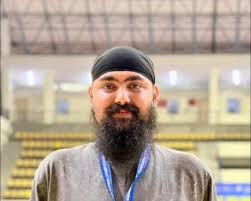
Indian para-taekwondo athlete Chandeep Singh has won gold at the 4th National Para Taekwondo Championship, held in New Delhi from March 28-30, 2026. Competing in the K44 -75kg men’s category (for athletes with visual impairment), the 28-year-old from Punjab dominated with a 12-4 victory over Rajasthan’s Rahul Sharma in the final. This triumph marks Chandeep’s second national gold, following his 2024 win in the same category. His journey began after losing vision in one eye due to an accident at age 20. Trained under coach Harpreet Singh at Punjab’s Taekwondo Academy, Chandeep’s speed and precise kicks shone through. In semis, he edged Haryana’s Vikram by 8-7, showcasing resilience.
The championship, organized by the Taekwondo Federation of India (TFI) and Paralympic Committee of India (PCI), featured 450 athletes from 25 states across 12 categories. It qualifies winners for the Asian Para Taekwondo Championships in Uzbekistan later this year. Chandeep’s gold adds to India’s tally of 18 medals (8 gold, 5 silver, 5 bronze).
Para-taekwondo, introduced in 2020, uses Kyorugi (sparring) with classifications like K43/K44 for vision-impaired fighters. Chandeep credits support from the Target Olympic Podium Scheme (TOPS) and Khelo India for his gear and training camps. “This medal is for every para-athlete facing odds,” Chandeep said post-win. His success boosts India’s para-sports momentum ahead of the 2028 Paralympics. Punjab Chief Minister Bhagwant Mann congratulated him, announcing Rs 5 lakh reward.
FAQs [Frequently Asked Questions]
1. Which category did Chandeep win gold in?
Chandeep won gold in the K44 -75kg men’s category for visually impaired athletes at the 4th National Para Taekwondo Championship in New Delhi.
2. What was the score in Chandeep’s final match?
Chandeep defeated Rajasthan’s Rahul Sharma 12-4 in the final, securing his second national gold after a strong semi-win over Haryana.
3. What does this win qualify him for?
The gold qualifies Chandeep for the Asian Para Taekwondo Championships in Uzbekistan, supported by TOPS and Khelo India programs.