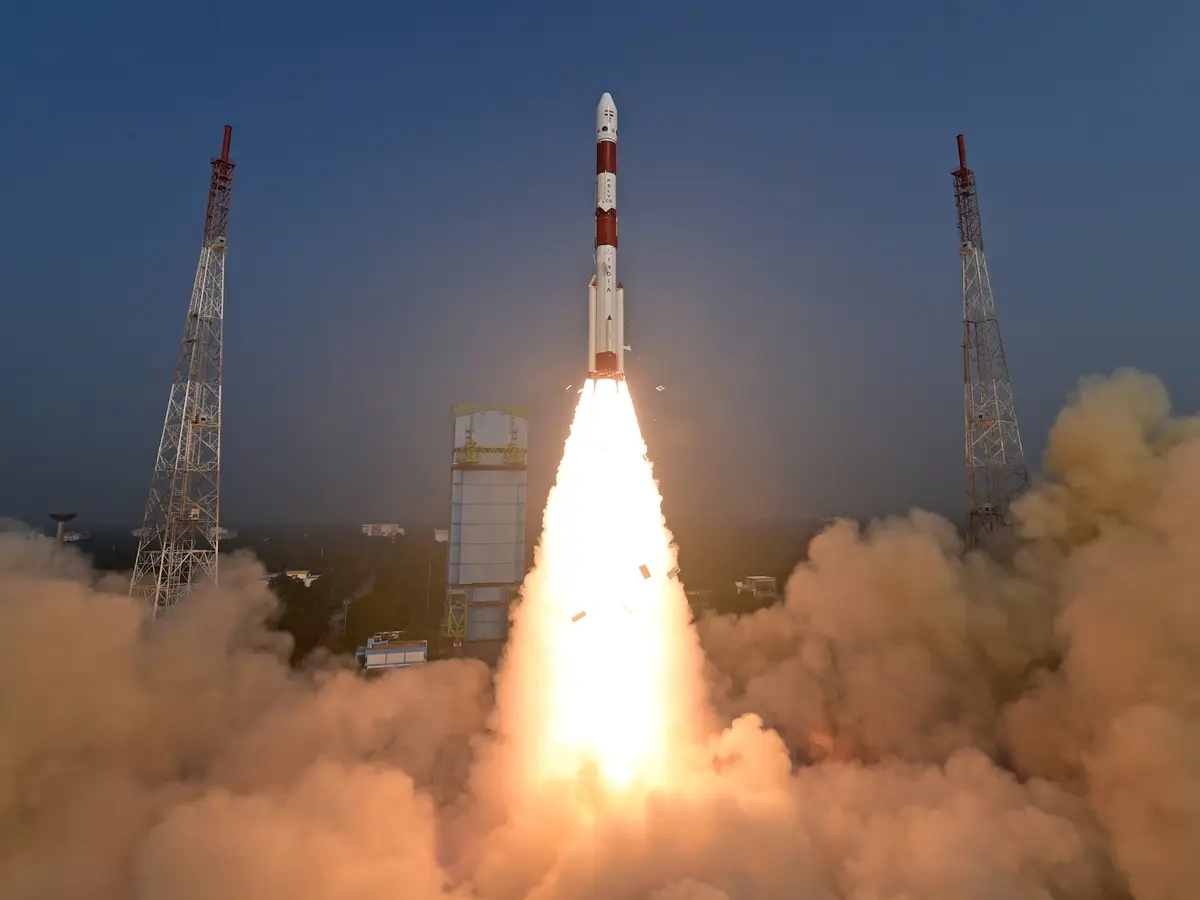
The Indian Space Research Organisation (ISRO) will start 2026 with a bang, launching the PSLV-C62 mission on January 12 at 10:17 AM IST from the Satish Dhawan Space Centre in Sriharikota. This marks ISRO’s 101st orbital launch and the 64th flight of its reliable Polar Satellite Launch Vehicle (PSLV) in the DL variant with two strap-on boosters.
The primary payload is EOS-N1, also called Anvesha, an advanced Earth observation satellite with hyperspectral imaging for better remote sensing. It will support agriculture monitoring, urban mapping, environmental assessment, and strategic applications, building on India’s growing space tech prowess. Riding along are 18 co-passenger satellites from India, Europe, Mauritius, and Spain, including a European demonstrator, boosting international ties.
Coming after the PSLV-C61 setback in 2025 due to a third-stage issue, C62 signals a strong return for the PSLV program. Public viewing is free at the Launch View Gallery with online registration, letting citizens witness history. ISRO eyes more missions like PSLV-N1 in February, underlining India’s space ambitions amid global competition.
FAQs [Frequently Asked Questions]
1. What is the PSLV-C62 mission?
PSLV-C62 is ISRO’s first 2026 launch on January 12 at 10:17 AM from Sriharikota, carrying EOS-N1 (Anvesha) and 18 co-satellites for Earth observation.
2. What does EOS-N1 Anvesha do?
Anvesha uses hyperspectral imaging for agriculture, urban mapping, environment monitoring, aiding strategic needs and remote sensing accuracy.
3. How can the public watch the launch?
Register online at lvg.shar.gov.in for free viewing from Launch View Gallery at SDSC SHAR, Sriharikota.
4. Why is this launch important for ISRO?
It’s the 64th PSLV flight post-C61 failure, marking 101st orbital mission and strengthening global satellite deployment partnerships.