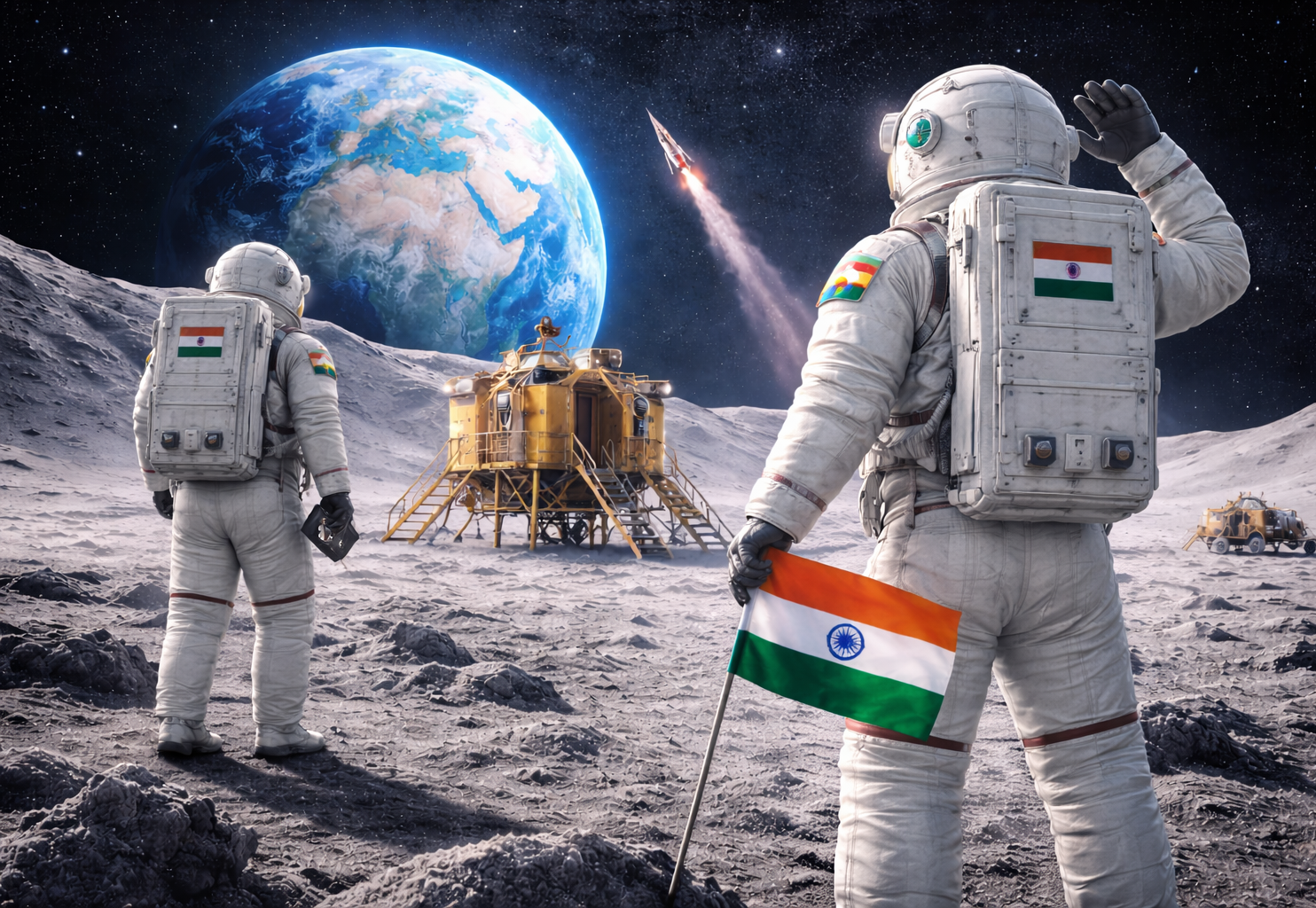
India aims to land humans on the Moon by 2027, as announced by ISRO Chairman V. Narayanan. This ambitious target marks a major step in India’s space program, building on recent successes like Chandrayaan-3. The mission will showcase advanced technology and boost national pride.
ISRO plans to achieve a crewed lunar landing through the Gaganyaan program, with the first uncrewed test flight already conducted in 2024. The human mission, targeted for 2027, will involve three astronauts orbiting Earth before descending to the Moon’s south pole. This site is rich in water ice, vital for future lunar bases. India joins a select group of nations racing for this milestone, ahead of its original 2030 goal due to accelerated progress.
The mission relies on the HLVM3 rocket, upgraded for human-rating with enhanced safety features like abort systems and life support. Training for astronauts occurs at ISRO’s human space flight centre in Bengaluru, with international partners like NASA aiding simulations. Budget allocation stands at Rs. 20,000 crore, supporting indigenous tech like re-entry modules and lunar suits designed for harsh conditions.
A successful landing will position India as the fourth country to achieve this feat, after the US, Russia, and China. It promises spin-offs in healthcare, telecom, and materials science, creating jobs and inspiring youth. Challenges include perfecting docking, radiation shielding, and safe return, but ISRO’s track record fuels optimism.
FAQs [Frequently Asked Questions]
Q1: What is the timeline for India’s human Moon mission?
ISRO aims for a crewed lunar landing by 2027 via Gaganyaan, starting with uncrewed tests in 2025-26. Astronauts will target the Moon’s south pole for water ice exploration, accelerating from the initial 2030 plan.
Q2: What technologies power the mission?
The HLVM3 rocket, human-rated with abort systems, life support, and re-entry capsules leads the effort. Indigenous lunar suits and docking tech, backed by Rs. 20,000 crore funding, ensure safety and self-reliance.
Q3: How does this benefit India?
It elevates India’s space stature, spurs tech innovations in health and telecom, creates jobs, and unlocks lunar resources like water ice for future missions, inspiring the next generation of scientists.