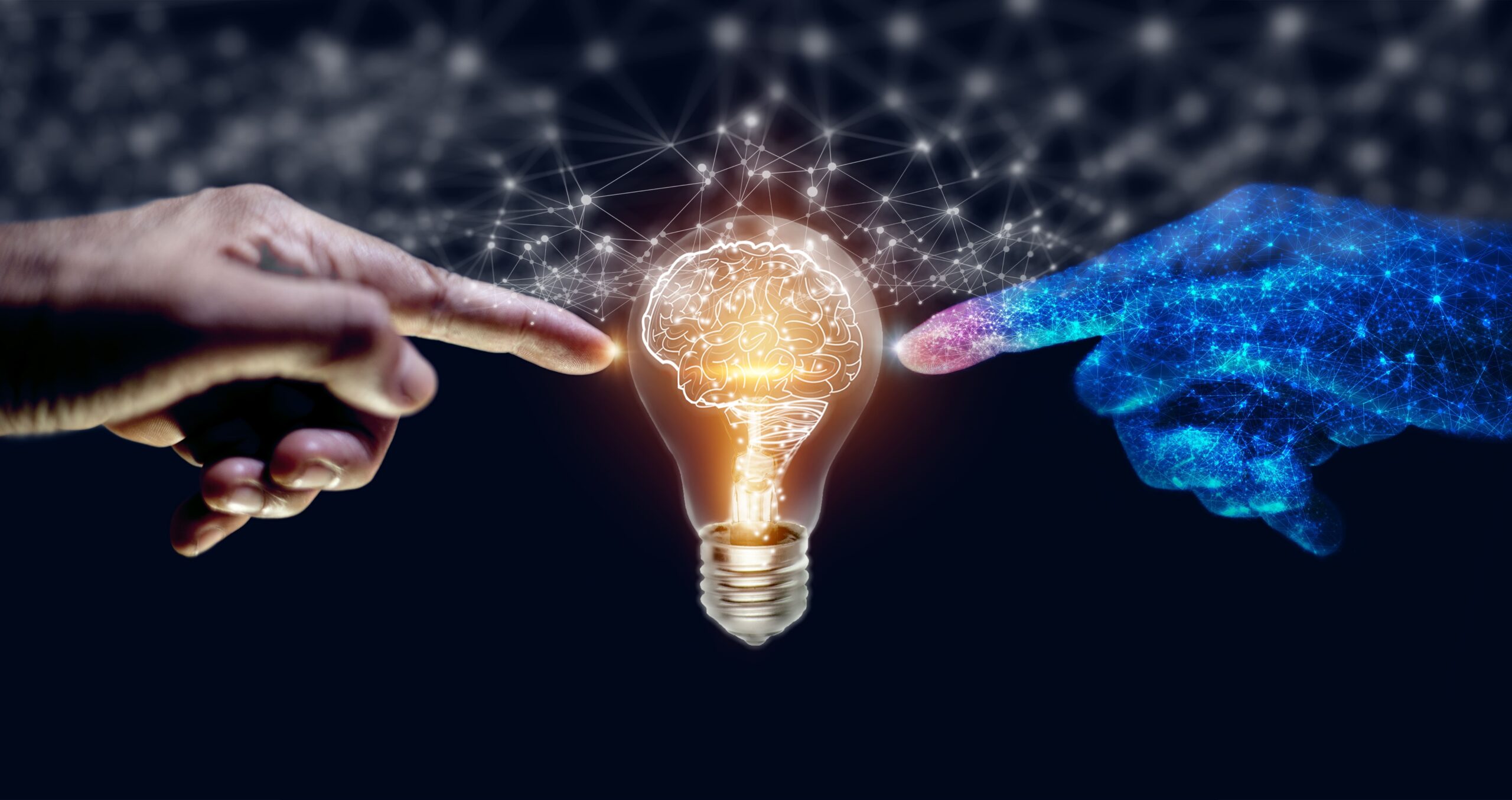
HOW VISIONARY MINDS ACROSS CONTINENTS ARE SHAPING A COLLABORATIVE, ETHICAL, AND TRANSFORMATIVE AI LANDSCAPE
Today, AI is evolving at a pace faster than most revolutions in history. It no longer lives in labs or sci-fi imaginations—it shapes real lives. Algorithms now diagnose diseases, generate poetry, power autonomous drones, predict climate patterns, and write code. AI is redesigning education systems, streamlining governance, and reimagining the economy. Its influence touches everything—from defense strategies to farming techniques.
What makes this moment extraordinary is that AI knows no borders. Data flows beyond nations, models are trained on global languages, and open-source communities fuel breakthroughs across continents. We stand at the birth of AI diplomacy, where collaboration—not competition—must guide our course. And rising with it is a new philosophy: techno-humanism, the belief that technology should elevate human dignity, not replace it.
But with such power comes pressing questions. Who are the minds steering this ship? What values do they carry? Is the AI we’re building inclusive, or does it cater to the privileged few? As machines grow more intelligent, it is not just about what they can do—but about who we become in the process.
This is the story of AI’s global guardians—and the future they are shaping.
THE GLOBAL COLLECTION OF AI LEADERSHIP
AI’s rise is not driven by one nation, one lab, or one genius. It is the result of a global chorus of minds, each contributing a verse to the symphony of intelligence. Across continents, a rich mosaic of leadership is shaping how AI evolves—and for whom. In the United States, pioneers like Sam Altman (OpenAI) and Dario Amodei (Anthropic) are pushing the boundaries of generative models. Their work powers tools like ChatGPT and Claude, now household names in digital interaction. The U.S. remains a hotbed of private innovation, where Silicon Valley still hums with disruptive energy. Across the Atlantic, the European Union is choosing a different path—one of responsibility. The EU AI Act is the world’s first comprehensive attempt to regulate artificial intelligence, placing human rights and transparency at the core of development. Europe’s leadership is legal, ethical, and deeply structural. China, meanwhile, has declared its ambition to lead the world in AI by 2030. Backed by its AI 2030 Roadmap, massive state investment, and companies like Baidu and Tencent, China is building AI not just for consumers—but for governance, surveillance, and statecraft. In India, innovation meets inclusion. Indigenous language models are making AI accessible to millions. Institutes like IIT Madras and AI startups like Sarvam are ensuring that the Indian linguistic and cultural diversity is part of AI’s global fabric. In Africa, AI is being woven into the soil—literally. In Kenya and Ghana, grassroots innovators are building AI tools for precision agriculture, drought prediction, and rural healthcare. And in the UAE, a futuristic vision blooms. The Mohamed bin Zayed University of Artificial Intelligence is the first of its kind, blending research and policy under one roof. AI leadership today is a map with many capitals. And its most powerful leaders aren’t just coders—they’re translators between vision, value, and the vast future ahead.
BREAKING THE SILOS: AI WITHOUT BORDERS
Artificial Intelligence was never meant to be confined within borders. The problems it seeks to solve—pandemics, poverty, climate change, inequality—don’t carry passports. If we are to build an AI that truly serves humanity, it must be born from collaboration, not competition. Around the world, efforts are underway to dissolve the silos of innovation. International research consortiums are emerging—teams of scientists, thinkers, and engineers from every corner of the globe, united by code and purpose. Platforms like Hugging Face are leading a quiet revolution. By open-sourcing powerful models and tools, they are giving small labs and local innovators access to capabilities once locked behind corporate walls.
AI for sustainable development is not a dream—it’s happening. From AI-powered disaster response systems in the Pacific to health prediction tools in sub-Saharan Africa, the technology is aligning with the UN’s Sustainable Development Goals (SDGs). AI, when designed inclusively, becomes a force multiplier for progress.
Global institutions like UNESCO, the UN, and the OECD are beginning to sketch ethical blueprints. They’re asking the hard questions: How do we build trust in systems we can’t always see? How do we ensure that algorithms don’t deepen divides?
But challenges remain. Nations fear losing control. Tech giants protect their data. Regulatory frameworks differ wildly across countries. The race to lead often overshadows the need to share.
Still, a new kind of diplomacy is rising—AI diplomacy. It’s not about treaties alone, but about shared values: openness, equity, and accountability. It’s about ensuring that no nation, no community, is left behind.
To truly break the silos, we must stop treating AI as a competitive edge—and start treating it as a collective responsibility. In the intelligence of machines lies the test of our own humanity.
ETHICAL HORIZONS AND THE LEADERSHIP CONUNDRUM
As AI grows smarter, the world must grow wiser. Intelligence alone isn’t enough—ethics must guide the algorithms. Today, we face a moral crossroads. Bias in datasets, surveillance without consent, algorithmic discrimination, and the spread of misinformation are not just technical glitches. They are reflections of deeper social fault lines.
Who decides what is fair? Who gets to train the machines that will shape our futures?
Voices like Timnit Gebru and Joy Buolamwini have raised the alarm. They’ve exposed how facial recognition systems often fail to see people of color accurately, how algorithms mirror societal prejudices, and how oversight is dangerously thin. Their work reminds us that invisible harm is still harm, and silence is no solution.
Meanwhile, thinkers like Yoshua Bengio, a pioneer of deep learning, are now advocating for slower, more responsible AI. He calls for global cooperation, not just competition, and warns against the unchecked power of corporate labs.
In response, a new wave of ethical AI labs, fairness audits, and human-centered design principles is emerging. These are spaces where technology is tested not just for performance, but for principle. Where questions like “who benefits?” and “who gets hurt?” are asked before a line of code is written.
Still, inequality shadows innovation. Many parts of the world remain underrepresented in AI datasets, research teams, and leadership circles. When AI doesn’t see everyone, it doesn’t serve everyone.
Ethical leadership in AI isn’t just about fixing the flaws. It’s about changing the foundation. It’s about making sure that empathy, inclusion, and justice are as core to AI as code.
Because in the end, the greatest intelligence isn’t artificial—it’s ethical. And the future of AI will be shaped not just by what we build, but by what we refuse to overlook.
THE NEW COLD WAR OR A COLLECTIVE RENAISSANCE?
As artificial intelligence reshapes global influence, the world finds itself caught between two futures: one of strategic rivalry, the other of shared renaissance. At the heart of this unfolding drama lies a silent, high-stakes contest—the AI race between the United States and China. On the American front, ChatGPT, developed by OpenAI, has become a cultural and technological landmark. Founded in 2015 and backed by Microsoft, OpenAI’s mission is to ensure that artificial general intelligence (AGI) benefits all of humanity. Since its public debut in 2022, ChatGPT has become a global tool for learning, productivity, and creativity. With each upgrade—now reaching GPT-4 Turbo—OpenAI balances performance with ethical caution, offering APIs, tools like DALL·E and Codex, and research on safety and alignment.
Meanwhile in China, a new contender has emerged: DeepSeek, an AI company based in Hangzhou and backed by hedge fund High-Flyer. Founded in 2023 by Liang Wenfeng, DeepSeek launched its flagship chatbot and the DeepSeek-R1 language model in January 2025. It’s trained on massive Chinese datasets and tuned for national needs—making it not just a product, but a piece of China’s digital sovereignty strategy. While the EU seeks to govern this landscape with the AI Act and India balances alliances with autonomy, the risks loom large. Military AI, autonomous weapons, and digital surveillance present real dangers. The line between innovation and exploitation grows thinner.
So we must ask: Will AI serve as a tool of hegemony—or humanity? Now is the moment for a bold idea: an AI Peace Accord, a Digital Geneva Convention. A shared global framework to protect ethics, rights, and dignity in the age of algorithms. Because the real race is not against each other—it’s against the worst versions of ourselves.
EDUCATION, ECONOMY & THE CULTURAL SHIFT
As artificial intelligence reshapes the world, countries are racing to prepare their people—not just for new jobs, but for a new way of thinking. From bustling metros to rural classrooms, AI literacy is becoming as essential as reading and math. Global education systems are adapting fast. Finland teaches AI basics in schools. Singapore has nationwide upskilling programs. In India, platforms like SWAYAM and initiatives by IITs are bringing AI learning to the masses. From blue-collar workers learning predictive maintenance to white-collar professionals mastering prompt engineering, reskilling has become a global priority.
The economy, too, is in flux. Automation is transforming industries. Entire job categories are fading, while new roles—AI trainers, ethicists, data curators—are emerging. Small businesses now use AI for logistics, marketing, and customer support. Gig workers partner with bots. Corporations are no longer just hiring talent—they’re integrating human-AI teams.
But this shift isn’t just technical—it’s deeply cultural. The traditional work ethic, built on repetition and routine, is giving way to creative thinking, adaptability, and emotional intelligence. People are learning to collaborate with machines, not compete with them.
Psychologically, it’s a challenge. There is excitement, but also fear. What does it mean to be “useful” in an age where machines can write, draw, and even empathize? And then there’s the question of identity. AI can help preserve dying languages and digitize ancient scripts. It can document oral traditions and archive folk knowledge. But it can also flatten cultures—standardizing speech, aesthetics, and values in the name of efficiency.
So the future depends on balance. Education must humanize AI. The economy must empower, not replace. Culture must evolve, not vanish. Because the AI-driven world isn’t just about machines—it’s about what kind of humanity we choose to bring with us.
THE FUTURE: COLLECTIVE INTELLIGENCE FOR HUMANITY
The horizon of artificial intelligence is expanding faster than we can chart it. What comes next may change not only what we do—but what it means to be human.
Artificial General Intelligence (AGI) is no longer a distant dream. Systems that can reason, adapt, and learn across domains—much like the human brain—are being quietly developed in labs around the world. Then there’s Quantum AI, where qubits could exponentially amplify machine intelligence, cracking problems that stump even the best classical computers.
Imagine AI-governed cities—where traffic lights learn in real time, policies are adjusted through real-time feedback, and civic services anticipate needs before they arise. These aren’t science fiction anymore—they’re blueprints waiting for bold hands.
But with power comes responsibility. The race must not be to the fastest intelligence, but to the wisest one. We need to shift from an intelligence-first mindset to a wisdom-first worldview—one rooted in empathy, foresight, and collective good.
The most promising future is not one where AI replaces us, but where it amplifies our global consciousness. A future where algorithms help heal, not divide. Where machines enhance the best of what makes us human—curiosity, compassion, creativity.
To get there, we need more than code—we need courage. Courage to ask: Who are we building this future for? What dreams guide our design? What fears are we encoding into these systems?
So here’s the question we must all sit with
ARE WE DESIGNING AI FOR THE WORLD WE TRULY WANT—OR FOR THE ONE WE FEAR?
Because in shaping AI, we are ultimately reshaping ourselves. And the future of intelligence— artificial or otherwise—will reflect the soul we put into it.
CONCLUSION
As we stand at the edge of the AI era, one truth is clear: the future demands inclusive, ethical, and borderless innovation. We cannot afford to let intelligence outpace integrity—or allow progress to be owned by a few. The choices we make today will define whether AI becomes a force of division or a bridge to shared human advancement. What we need now is visionary leadership—rooted not in dominance, but in shared values, bold ethics, and collective purpose. The world doesn’t just need smarter systems. It needs wiser stewards.
At Influence 360, we believe AI should be a partner to humanity, not a replacement. It should uplift, not overshadow. This is just the beginning. In future editions, we’ll dive deeper—especially into how women leaders are shaping the AI narrative with empathy, resilience, and innovation. Because the future isn’t just being built. It’s being led.