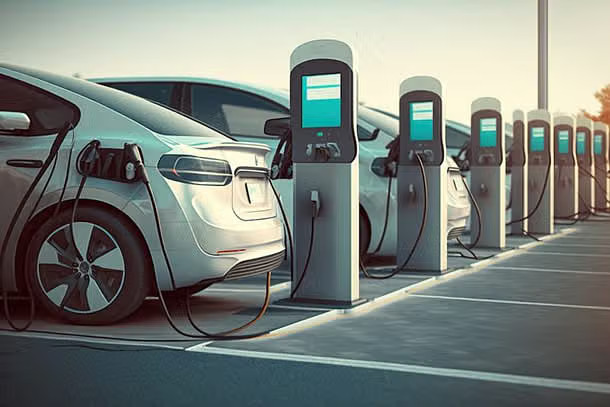
India has reached an important milestone in its electric vehicle (EV) journey, with 4,557 public charging stations now installed along highways and expressways. Union Minister Nitin Gadkari recently announced in Parliament that these stations cover a massive stretch of 146,342 km across the nation. The move is part of India’s push to make EV travel easy and practical, encouraging more people to adopt greener vehicles for long-distance and inter-city journeys.
The state-wise breakdown shows Uttar Pradesh leading with 507 charging stations, followed by Karnataka (489), Maharashtra (459), Tamil Nadu (456), and Rajasthan (424). The presence of these stations means that travelers along major routes can now plan their EV journeys with confidence, with charging points available at regular intervals.
Boost from Government Schemes and Strategic Planning
The growth in public charging stations is thanks to strong government support and planning. Initiatives like the PM E-Drive scheme, with a financial outlay of ₹2,000 crore, aim to install up to 72,000 more public charging stations in the coming years. These stations are being placed in strategic spots—like metro cities, toll plazas, railway stations, airports, and highways—to serve both local commuters and long-distance travelers. The Bureau of Energy Efficiency (BEE) and the Ministry of Heavy Industries are playing key roles in developing this infrastructure.
Besides highways, the government reports that tier-2 cities also have around 4,625 operational charging stations as of April 2025. The Oil Marketing Companies (OMCs) are setting up thousands more, especially under the FAME-II scheme. This collective push is meant to keep India in step with its electric mobility goals and reduce dependence on fossil fuels.
What This Means for EV Users and the Future
For EV owners and future buyers, the growing network of charging stations greatly reduces “range anxiety”—the worry about finding a charging point on long trips. It also underlines the government’s commitment to building an EV-friendly ecosystem. With easier access to charging, people can confidently switch to electric vehicles, which are better for the environment and cheaper to run over time.